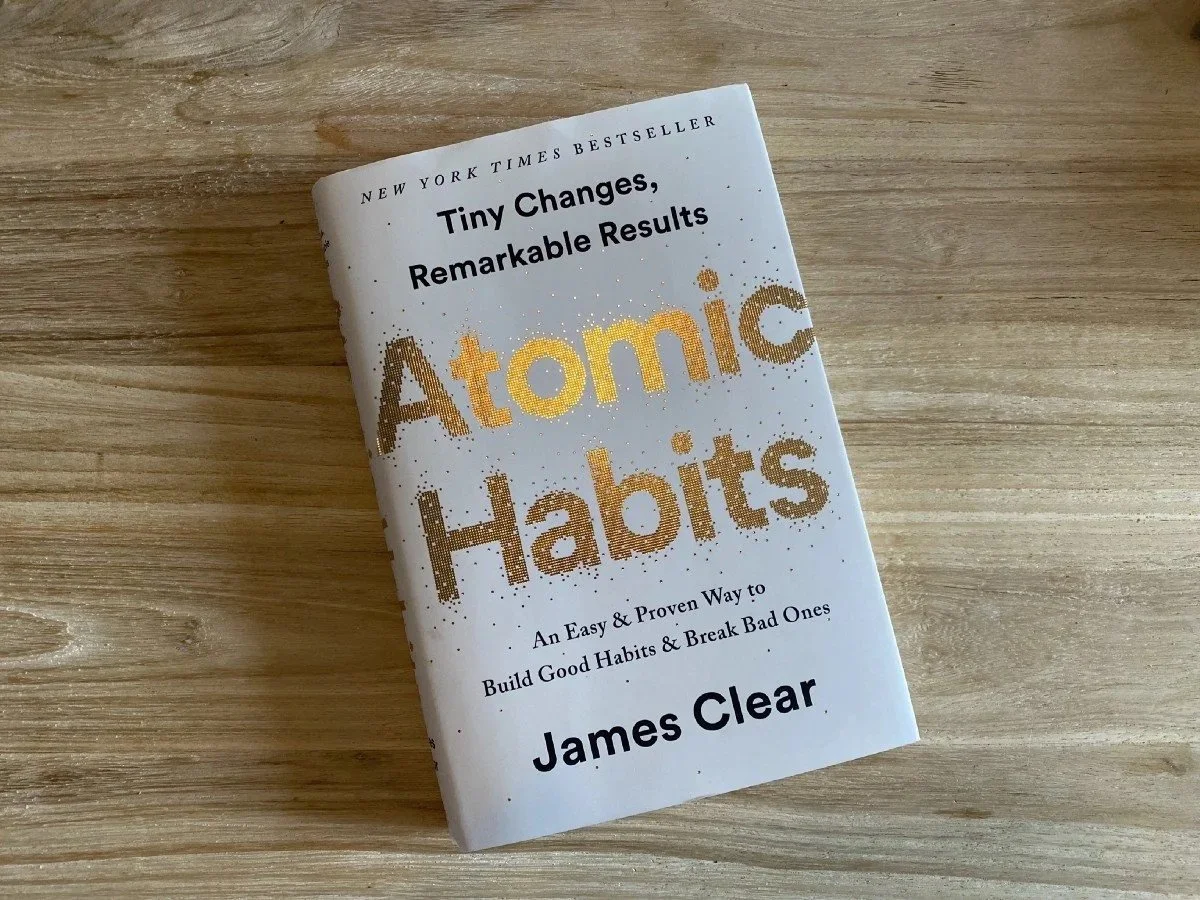
Notes on Atomic Habits by James Clear
How Habits Work
Habits: A behavior repeated enough to become automatic
Why Habits Matter
Reduce cognitive load
Compound the value of behaviors over time
Often undervalued because benefits are delayed
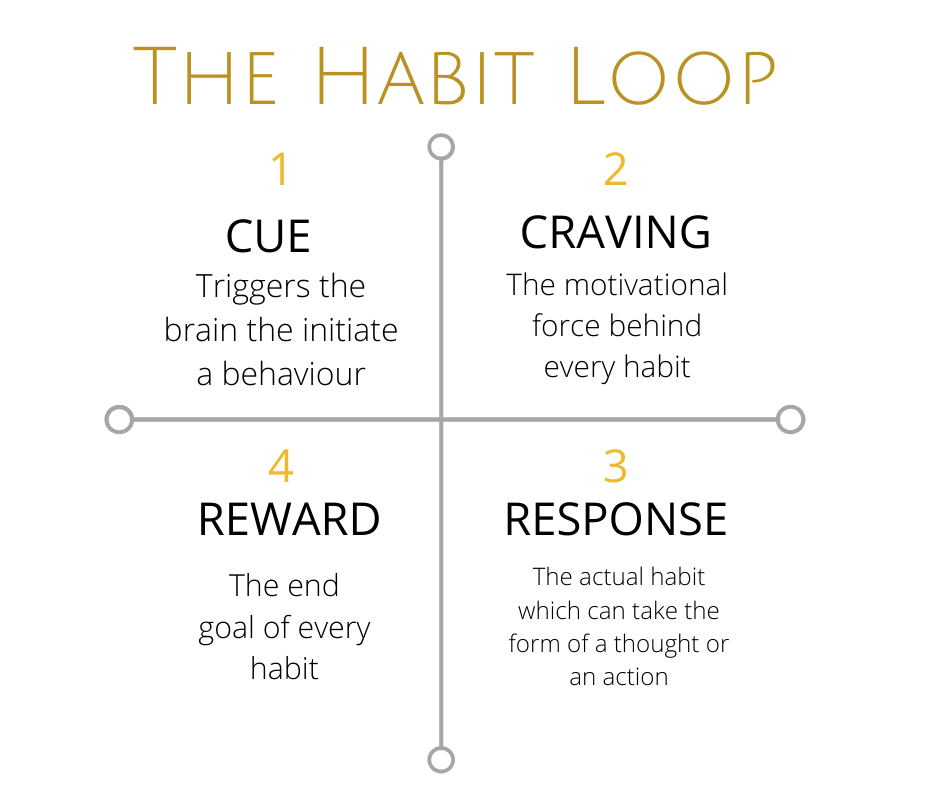
Cue — Make It Obvious
Become aware of your habits. Because they’re automatic, you might not notice them initially.
Track your habits for a week
Ask whether each habit is good, bad, or neutral. Is it the type of habit that helps you be the type of person you want to be?
Implementation Intentions: Make a plan beforehand about when/where to act.
“When X happens, I will do Y.”
Make plans realistic. Don’t ask your future self to do something when you know you’ll already be occupied or unmotivated.
Repeat the behavior consistently so you get the urge to do it automatically, like a dog salivating at lunch time.
Habit Stacking: Pair a new habit with an existing one
Environment Design
Disciplined people design environments that require less discipline
Consistent environment → Consistent cues → Consistent behavior
Subtract bad cues
Add visible good cues
Friends — Be sure you have good friends that reinforce good habits
Phones — A double-edged sword, can be cues for good and bad habits
Workspace — Consider dividing your room or living area for different tasks
Craving — Make It Attractive
Temptation Bundling: Pairing a high-temptation, enjoyable activity with a necessary, low-enjoyment activity
Create a motivation ritual by combining habit stacking + temptation bundling:
After [current habit] → do [desired habit]
After [desired habit] → do [reward]
Social Influence
Peer pressure is only bad if you have bad peers. Joining a community where people are doing your desired behavior can be a super power.
Many habits are learned by imitation. We are especially likely to imitate:
Those we like
Those of the majority
Those with power
Cognitive Reframing
If something is not good for you, cutting it out of your life is not a sacrifice.
E.g. You’re not “giving up” smoking, you’re choosing a longer life.
“I get to” vs. “I have to”
Cutting bad habits = gain, not sacrifice
Know Thyself
Recognizing what our underlying motives are helps us achieve them more effectively and dispense with less healthy habits
Examples of underlying motives → behavior:
Find love and reproduce = swiping on Tinder
Connect and bond with others = scrolling on Facebook
Win social acceptance and approval = posting on Instagram
Reduce uncertainty = searching on Google
Achieve status and prestige = playing video games
Response — Make It Easy
The perfect is the enemy of the good
“If you want to master a habit, the key is to start with repetition, not perfection.”
Don’t obsess over quality or finding the “optimal” solution. Do so much volume, that you learn to create quality in the process.
Habits don’t form over time. They form over repetitions.
Don’t let preparation be a form of procrastination.
Reduce Friction
Addition by subtraction: Remove the points of friction that sap your time and energy.
Prime your environment to make future good actions easier. Clean and organize it for the specific purpose you want for it.
Things become easy once you’ve taken the first step.
Habits are the ramp to a highway. They lead you down a path and before you know it, you’re speeding toward the next behavior.
Use technology to automate tasks: autofill prescriptions, automate retirement savings, meal delivery, cut off social media
Master the habit of showing up
Habit Shaping: Gradually modifying behaviors by breaking down large goals into small, manageable, and consistent actions
Always stay below the point where it feels like work.
Take the smallest action that confirms the type of person you want to be
Two Minute Rule: When you start a new habit, it should take less than 2 minutes to do
Commitment Device: A choice made in the present that restricts your future options to ensure you follow through on long-term goals
Change your task so it’s harder to get out of the habit than it is to get started on it
Reward — Make It Satisfying
What is immediately rewarded is repeated. What is immediately punished is avoided.
Many worthwhile goals are long term and have delayed rewards. Break down long term goals into shorter term goals that can be immediately rewarded.
Tracking progress
Beware Goodhart’s Law when tracking habits: “When a measure becomes a target, it ceases to be a good measure”
The Paper Clip Strategy: To create a visual measure of progress, add paper clips to a jar every time you succeed
Digital habit tracker:
Use your last action as a trigger for your next action
Objective measurements keep you honest
Automate measurement if possible
Limit manual tracking to your most important habits
Track your habits immediately after completion
Consider getting a calendar and cross off each day you stick to your routine
Staying Consistent
It’s not so much what happens during the workout. It’s about being the type of person who doesn’t miss workouts. Show up even on your bad days
“Don’t break the chain”
Don’t miss twice — The spiral of repeated mistakes is what ruins you
Habit Contract: Write a commitment to yourself about what you’ll do, consequences if you fail, and get people to act as accountability partners
On Identity
Core Idea: Shift your focus from outcomes → habit systems and identity
Goals can delay happiness. People fixate on outcomes instead of enjoying the process
They create a yo-yo effect: bursts of effort followed by burnout
Goals ≠ success. Winners and losers often share the same goals
Focus less on what you want to achieve and more on who you want to become
Avoid Negative Identities:
“I’m bad at math”
“I’m always late”
“I’m not a morning person”
“I’m bad at remembering names”
“I’m not good with technology”
Use Flexible Identity Framing
❌ “I’m an athlete”
✅ “I’m the type of person who enjoys physical challenges”
❌ “I’m a CEO”
✅ “I’m the type of person who builds and creates things”
The Identity Reinforcement Loop
Repetition → Evidence → Belief
Decide who you want to be
Prove it with small wins
“Every action is a vote for the type of person you wish to become.”
Developing an intermediate identity: “I’m the type of person who is becoming X”
Working backward from your ideal identity: “Who is the type of person who gets the outcomes I want?”
On Progress
“Walk slowly, but never backward.”
Don’t be discouraged if you feel like you’ve plateaued. Change is often gradual, then sudden.
Beware the Valley of Disappointment: The stage where you expect to see a lot of progress but don’t yet see it.
Metaphors:
Ice: Ice melts at 32°F — but every degree from 10 to 20 to 30 was a step toward that moment. Breakthrough results come from the accumulation of many unseen previous actions.
Tectonic Plates: Tectonic plates grind silently for ages until latent energy is suddenly released as an earthquake. Progress works the same way.
Advanced Concepts
Choose the Right Habits
Genes influence opportunities. Choose areas that match your natural skills
Questions to ask:
What feels fun to me but work to others?
When do I lose track of time?
Where do I get greater returns than the average person?
Create a Niche
If you can’t find a game where the odds are stacked in your favor, make a new one
Combine your skills together. Specialize and form a niche.
Work on tasks of just manageable difficulty
Beware complacency. Combine good habits with deliberate practice for mastery.
The greatest barrier to success is not failure but boredom
Goldilocks Rule: Humans experience peak motivation when working on tasks that are right on the edge of their current abilities
When starting a habit, make things easy. Once the habit is established, continue to advance in small ways, create small challenges for yourself
Reviewing Progress
Reflection is like looking in a mirror. You don’t want to do it all the time — you’ll become self-conscious and paralyzed.
But you also don’t want to avoid it forever — you might miss out on things you can fix.
Annual Review
What worked?
What didn’t?
What did I learn?
Integrity Review
What are the core values that drive my life and work?
How am I living and working with integrity right now?
How can I set a higher standard in the future